Tyson Beef/pork Usda Choice Beef Stew Meat, 1 Lbtyson Beef/pork

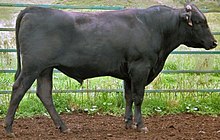
Wagyu cattle are an example of a breed raised primarily for beef
Beef is the culinary proper name for meat from cattle (Bos taurus).
In prehistoric times, humans hunted aurochs and later domesticated them. Since that fourth dimension, numerous breeds of cattle have been bred specifically for the quality or quantity of their meat. Today, beef is the tertiary most widely consumed meat in the earth, subsequently pork and poultry. As of 2018, the United States, Brazil, and Communist china were the largest producers of beef.
Beef can be prepared in various ways; cuts are oft used for steak, which can be cooked to varying degrees of doneness, while trimmings are often ground or minced, every bit found in most hamburgers. Beef contains protein, fe, and vitamin B12. Along with other kinds of red meat, high consumption is associated with an increased risk of colorectal cancer and coronary eye disease, especially when processed. Beef has a high environmental bear upon, existence a master driver of deforestation with the highest greenhouse gas emissions of any agronomical product.
Etymology [edit]
The give-and-take beef is from the Latin bōs,[one] in contrast to moo-cow which is from Centre English cou (both words have the same Indo-European root *gʷou- ).[2] After the Norman Conquest, the French-speaking nobles who ruled England naturally used French words to refer to the meats they were served. Thus, various Anglo-Saxon words were used for the animal (such as nēat, or cu for developed females) by the peasants, but the meat was called boef (ox) (Modernistic French bœuf) by the French nobles — who did non often deal with the alive animal — when it was served to them. This is ane example of the common English dichotomy between the words for animals (with largely Germanic origins) and their meat (with Romanic origins) that is too found in such English discussion-pairs equally pig/pork, deer/venison, sheep/mutton and chicken/poultry (also the less common goat/chevon).[3] Beef is cognate with bovine through the Late Latin bovīnus.[4] The rarely used plural form of beef is beeves.[v]
History [edit]
People take eaten the flesh of bovines since prehistoric times; some of the primeval known cave paintings, such as those of Lascaux, prove aurochs in hunting scenes.[6] People domesticated cattle to provide ready access to beef, milk, and leather.[7] Cattle have been domesticated at least twice over the class of evolutionary history. The first domestication upshot occurred effectually 10,500 years ago with the evolution of Bos taurus. The 2nd was more recent, effectually 7,000 years ago, with the evolution of Bos indicus in the Indus Valley. There is a possible third domestication effect 8,500 years ago, with a potential third species Bos africanus arising in Africa.[viii] Well-nigh cattle originated in the One-time World, with the exception of bison hybrids, which originated in the Americas. Examples include the Wagyū from Japan, Ankole-Watusi from Egypt, and longhorn Zebu from the Indian subcontinent.[9]
In the United States, the growth of the beefiness business organisation was largely due to expansion in the Southwest. Upon the acquisition of grasslands through the Mexican–American State of war of 1848, and later the expulsion of the Plains Indians from this region and the Midwest, the American livestock manufacture began, starting primarily with the taming of wild longhorn cattle. Chicago and New York City were the outset to benefit from these developments in their stockyards and in their meat markets.[10]
Production [edit]
Beefiness cattle are raised and fed using a variety of methods, including feedlots, gratuitous range, ranching, backgrounding and intensive animal farming. Concentrated Creature Feeding Operations (CAFOs), commonly referred to as factory farms, are ordinarily used to meet the need of beef production. CAFOs supply 70.4% of cows in the US market and 99% of all meat in the Us supply.[11] Cattle CAFOs can too exist a source of E. coli contamination in the food supply[12] due to the prevalence of manure in CAFOs. These Due east. coli contaminations include one strain, E. coli O157:H7, which tin be toxic to humans, because cattle typically hold this strain in their digestive system.[13] Another consequence of unsanitary conditions created by high-density confinement systems is increased apply of antibiotics in order to prevent illness.[xiv] An analysis of FDA sales information by the Natural Resources Defense Council plant 42% of medically of import antibiotic use in the U.S. was on cattle, posing concerns near the evolution of antibiotic resistant bacteria.[15]
Environmental impact [edit]

The amount of globally needed agronomical country would exist reduced by almost half if no beef or mutton would be eaten.
| Food Types | Greenhouse Gas Emissions (g CO2-Ceq per g protein) |
|---|---|
| Ruminant Meat | 62 |
| Recirculating Aquaculture | 30 |
| Trawling Fishery | 26 |
| Non-recirculating Aquaculture | 12 |
| Pork | 10 |
| Poultry | 10 |
| Dairy | 9.ane |
| Non-trawling Fishery | 8.half dozen |
| Eggs | 6.viii |
| Starchy Roots | i.7 |
| Wheat | 1.2 |
| Maize | 1.2 |
| Legumes | 0.25 |
| Food Types | Land Apply (m2year per 100g protein) |
|---|---|
| Lamb and Mutton | 185 |
| Beef | 164 |
| Cheese | 41 |
| Pork | 11 |
| Poultry | vii.1 |
| Eggs | 5.7 |
| Farmed Fish | iii.vii |
| Groundnuts | iii.5 |
| Peas | iii.4 |
| Tofu | 2.2 |
The consumption of beefiness poses numerous threats to the natural environment. Of all agricultural products, beef requires some of the well-nigh land and h2o, and its product results in the greatest amount of greenhouse gas emissions (GHG),[18] air pollution, and water pollution.[19] A 2021 study added up GHG emissions from the entire lifecycle, including product, transportation, and consumption, and estimated that beef contributed almost 4 billion tonnes (9%) of anthropogenic greenhouse gases in 2010.[20] : 728 Cattle populations graze around 26% of all state on Earth, not including the large agronomical fields that are used to grow cattle feed.[21] [22] According to FAO, "Ranching-induced deforestation is one of the main causes of loss of some unique plant and fauna species in the tropical rainforests of Central and South America as well as carbon release in the atmosphere."[23] Beef is also the primary driver of deforestation in the Amazon, with around 80% of all converted state existence used to rear cattle.[24] [25] [26] 91% of Amazon land deforested since 1970 has been converted to cattle ranching.[21] [27] 41% of global deforestation from 2005 to 2013 has been attributed to the expansion of beef production.[28] This is due to the higher ratio of cyberspace energy of gain to net energy of maintenance where metabolizable energy intake is higher.[29] It takes seven pounds of feed to produce a pound of beef (live weight), compared to more than three pounds for a pound of pork and less than two pounds for a pound of chicken.[30] All the same, assumptions virtually feed quality are implicit in such generalizations. For example, product of a pound of beef cattle live weight may require between 4 and 5 pounds of feed high in protein and metabolizable energy content, or more than twenty pounds of feed of much lower quality.[29] A simple substitution of beef to soy beans (a common feed source for cattle) in Americans' diets would, co-ordinate to one gauge, result in coming together between 46 and 74 percent of the reductions needed to run across the 2020 greenhouse gas emission goals of the Usa as pledged in 2009.[31] [ needs update ] A 2021 CSIRO trial concluded that feeding cattle a 3% nutrition of the seaweed Asparagopsis taxiformis could reduce the methane component of their emissions by fourscore%.[32] [33]
Some scientists claim that the need for beef is contributing to significant biodiversity loss as it is a significant driver of deforestation and habitat devastation; species-rich habitats, such equally significant portions of the Amazon region, are being converted to agriculture for meat production.[34] [35] [36] The 2019 IPBES Global Cess Report on Biodiversity and Ecosystem Services likewise concurs that the beefiness manufacture plays a significant role in biodiversity loss.[37] [38] Around 25% to nearly forty% of global land surface is being used for livestock farming, which is generally cattle.[37] [39]
Certifications [edit]
Some kinds of beef may receive special certifications or designations based on criteria including their breed (Certified Angus Beef,[twoscore] Certified Hereford Beef), origin (Kobe beefiness,[41] Carne de Ávila, Belgian Blue[42]), or the way the cattle are treated, fed or slaughtered (organic, grass-fed, Kosher, or Halal beef[43]). Some countries regulate the marketing and sale of beef by observing criteria post-slaughter and classifying the observed quality of the meat.
Global statistics [edit]
In 2018, the United States, Brazil, and Mainland china produced the nigh beef with 12.22 million tons, nine.nine million tons, and 6.46 one thousand thousand tons respectively.[44] The superlative 3 beef exporting countries in 2019 were Australia (14.8% of total exports), the United States (xiii.4% of full exports), and Brazil (12.6% of total exports).[45] Beef production is also important to the economies of Japan, Argentina, Uruguay, Canada, Paraguay, Mexico, Belarus and Nicaragua.
Acme 5 cattle and beef exporting countries (2016)
Beef exports, including buffalo meat, in metric tons (2016)[46]
Every bit per 2020 (Metric tons), Brazil was the largest beef exporter in the globe in 2020 followed by Australia, Usa, India (Includes Carabeef only) and Argentine republic[47]
Brazil, Australia, the United States and India accounted for roughly 61% of the world'south beef exports[48]
| Rank | State | 2020 | % of the World[49] | Country | 2016 | % of the World |
|---|---|---|---|---|---|---|
| 1 | Brazil | 2,539,000 | 23.fifty% | Brazil | 1,850,000 | 19.threescore% |
| 2 | Commonwealth of australia | 1,476,000 | 13.66% | India | 1,850,000 | 19.60% |
| three | United states of america | 1,341,000 | 12.41% | Australia | i,385,000 | 14.67% |
| 4 | Bharat | 1,284,000 | 11.88% | U.s. | 1,120,000 | 11.87% |
| 5 | Argentine republic | 819,000 | 7.58% | New Zealand | 580,000 | 6.14% |
Top x cattle and beef producing countries (2009, 2010)[fifty]
Beef production (grand Metric Tons CWE) (2009)
The world produced threescore.57 million metric tons of beef in 2020, down 950K metric tons from the prior year.
Major decline for production of beefiness was from Republic of india up to 510k and Australia down to 309K metric tons from the prior year[51]
| Rank | Land | 2009 | 2010 | % Chg | Country | 2019 | 2020 | Change | %Chg |
|---|---|---|---|---|---|---|---|---|---|
| ane | United states | eleven,889 | 11,789 | −0.viii% | United states | 12,384 | 12,379 | -five,000 | -0.04% |
| 2 | Brazil | viii,935 | 9,300 | iv% | Brazil | ten,200 | x,100 | -100,000 | -1% |
| three | Eu-27 | 7,970 | seven,920 | −0.6% | European union- 27 | 7,878 | 7,810 | -68,000 | -0.ix% |
| iv | China | five,764 | five,550 | −4% | China | half-dozen,670 | half-dozen,720 | fifty,000 | 0.8% |
| 5 | Argentina | three,400 | 2,800 | −18% | India | 4,270 | 3,760 | -510,000 | -12% |
| 6 | India | two,610 | two,760 | vi% | Argentine republic | 3,125 | iii,230 | 105,000 | 3% |
| 7 | Australia | two,100 | ii,075 | −one% | Commonwealth of australia | 2,432 | 2,123 | -309,000 | -12% |
| 8 | United mexican states | 1,700 | 1,735 | ii% | Mexico | 2,027 | 2,079 | 52,000 | 3% |
| 9 | Russia | 1,285 | 1,260 | −2% | Pakistan | 1,820 | 1,820 | NIL | NIL |
| 10 | Pakistan | 1,226 | 1,250 | 2% | Russian federation | ane,374 | one,378 | 4,000 | 0.iii% |
National cattle herds (Per thousand Head)
| Rank | Country | 2009 | 2010 | % Chg |
|---|---|---|---|---|
| i | India | 57,960 | 58,300 | 0.6% |
| 2 | Brazil | 49,150 | 49,400 | 0.five% |
| three | China | 42,572 | 41,000 | −iv% |
| iv | United States | 35,819 | 35,300 | −1.four% |
| 5 | European union-27 | 30,400 | 30,150 | −0.eight% |
| 6 | Argentina | 12,300 | thirteen,200 | seven% |
| 7 | Australia | 9,213 | x,158 | 10% |
| eight | Russian federation | 7,010 | half-dozen,970 | −0.6% |
| 9 | United mexican states | six,775 | six,797 | 0.3% |
| x | Colombia | 5,675 | five,675 | 0.0% |
Preparation [edit]
Cuts [edit]
Most beef tin be used every bit is by just cutting into certain parts, such equally roasts, brusk ribs or steak (filet mignon, sirloin steak, rump steak, rib steak, rib center steak, hanger steak, etc.), while other cuts are processed (corned beef or beefiness hasty). Trimmings, on the other hand, which are normally mixed with meat from older, leaner (therefore tougher) cattle, are ground, minced or used in sausages. The blood is used in some varieties called blood sausage. Other parts that are eaten include other muscles and offal, such as the oxtail, liver, tongue, tripe from the reticulum or rumen, glands (particularly the pancreas and thymus, referred to as sweetbread), the center, the encephalon (although forbidden where at that place is a danger of bovine spongiform encephalopathy, BSE, commonly referred to as mad cow disease), the kidneys, and the tender testicles of the bull (known in the Usa equally calf fries, prairie oysters, or Rocky Mountain oysters). Some intestines are cooked and eaten as is,[52] but are more frequently cleaned and used as natural sausage casings. The basic are used for making beef stock. Meat from younger cows (calves) is called veal. Beef from steers and heifers is similar.[53]
Beef is first divided into primal cuts, large pieces of the animal initially separated by butchering. These are bones sections from which steaks and other subdivisions are cutting. The term "cardinal cut" is quite different from "prime cut", used to characterize cuts considered to be of college quality. Since the beast's legs and neck muscles practice the nigh work, they are the toughest; the meat becomes more tender equally distance from hoof and horn increases. Dissimilar countries and cuisines have different cuts and names, and sometimes use the same proper name for a dissimilar cut; for example, the cut described as "brisket" in the U.s.a. is from a significantly different office of the carcass than British brisket.[ citation needed ]
Crumbling and tenderization [edit]
To improve tenderness of beefiness, it is often aged (i.e., stored refrigerated) to allow endogenous proteolytic enzymes to weaken structural and myofibrillar proteins. Wet crumbling is achieved using vacuum packaging to reduce spoilage and yield loss. Dry crumbling involves hanging primals (ordinarily ribs or loins) in humidity-controlled coolers. Outer surfaces dry out and tin can support growth of molds (and spoilage bacteria, if as well humid), resulting in trim and evaporative losses.
Evaporation concentrates the remaining proteins and increases flavor intensity; the molds tin contribute a nut-similar season. Afterwards two to iii days at that place are pregnant effects. The majority of the tenderizing effect occurs in the first x days. Boxed beefiness, stored and distributed in vacuum packaging, is, in effect, moisture anile during distribution. Premium steakhouses dry out age for 21 to 28 days or wet age up to 45 days for maximum outcome on flavor and tenderness.
Meat from less tender cuts or older cattle can be mechanically tenderized past forcing small, sharp blades through the cuts to disrupt the proteins. Also, solutions of exogenous proteolytic enzymes (papain, bromelin or ficin) tin can be injected to augment the endogenous enzymes. Similarly, solutions of common salt and sodium phosphates tin can exist injected to soften and swell the myofibrillar proteins. This improves juiciness and tenderness. Salt can amend the flavor, but phosphate can contribute a soapy flavor.
Cooking methods [edit]
These methods are applicable to all types of meat and another foodstuffs.
Dry out heat [edit]

| Method | Description |
|---|---|
| Grilling | Cooking the beef over or under a loftier radiant heat source, generally in excess of 340 °C (650 °F). This leads to searing of the surface of the beefiness, which creates a flavorsome crust. In Commonwealth of australia, New Zealand, the United States, Canada, the UK, Frg and The Netherlands, grilling, particularly over charcoal, is sometimes known as barbecuing, often shortened to "BBQ". When cooked over charcoal, this method can likewise exist called charbroiling. |
| Charcoal-broil | A technique of cooking that involves cooking meat for long periods of time at low temperatures with smoke from a wood burn. |
| Broiling | A term used in North America. It is like to grilling, simply with the oestrus source always above the meat. Elsewhere this is considered a way of grilling. |
| Griddle | Meat may be cooked on a hot metal griddle. A little oil or fatty may be added to inhibit sticking; the dividing line when the method becomes shallow frying is not well-defined. |
| Roasting | A manner of cooking meat in a hot oven, producing roast beef. Liquid is not usually added; the beef may be basted by fat on the meridian, or by spooning hot fat from the oven pan over the acme. A gravy may be made from the cooking juices, after skimming off excess fat. Roasting is suitable for thicker pieces of meat; the other methods listed are unremarkably for steaks and similar cuts. |
Internal temperature [edit]

Beefiness rump steak on grill pan, cooked medium rare
Beef can be cooked to various degrees, from very rare to well done. The caste of cooking corresponds to the temperature in the approximate centre of the meat, which can be measured with a meat thermometer. Beef tin be cooked using the sous-vide method, which cooks the entire steak to the same temperature, but when cooked using a method such as broiling or roasting it is typically cooked such that it has a "bulls centre" of doneness, with the least done (coolest) at the center and the most washed (warmest) at the outside.
Frying [edit]
Meat can exist cooked in boiling oil, typically by shallow frying, although deep frying may be used, oftentimes for meat enrobed with breadcrumbs as in milanesas or finger steaks. Larger pieces such as steaks may be cooked this mode, or meat may be cut smaller as in stir frying, typically an Asian way of cooking: cooking oil with flavorings such as garlic, ginger and onions is put in a very hot wok. Then small pieces of meat are added, followed by ingredients which cook more quickly, such as mixed vegetables. The dish is set up when the ingredients are 'just cooked'.
Moist heat [edit]
Moist estrus cooking methods include braising, pot roasting, stewing and sous-vide. These techniques are often used for cuts of beefiness that are tougher, as these longer, lower-temperature cooking methods have fourth dimension to deliquesce connecting tissue which otherwise makes meat remain tough afterwards cooking.
- Stewing or simmering
- simmering meat, whole or cutting into seize with teeth-size pieces, in a water-based liquid with flavorings. This technique may be used as part of pressure cooking.
- Braising
- cooking meats, in a covered container, with minor amounts of liquids (usually seasoned or flavored). Unlike stewing, braised meat is not fully immersed in liquid, and normally is browned before the oven pace.
- Sous-vide
- Sous-vide, French for "under vacuum", is a method of cooking nutrient sealed in closed plastic bags in a water bath for a long time—72 hours is not unknown—at an accurately determined temperature much lower than unremarkably used for other types of cooking. The intention is to maintain the integrity of ingredients and achieve very precise control of cooking. Although water is used in the method, simply moisture in or added to the food numberless is in contact with the food.

Beef roasted with vinegar and sliced with spiced paste, often called "common cold beef"
Meat has ordinarily been cooked in water which is just simmering, such equally in stewing; higher temperatures make meat tougher past causing the proteins to contract. Since thermostatic temperature control became available, cooking at temperatures well below boiling, 52 °C (126 °F) (sous-vide) to ninety °C (194 °F) (slow cooking), for prolonged periods has get possible; this is just hot enough to convert the tough collagen in connective tissue into gelatin through hydrolysis, with minimal toughening.
With the adequate combination of temperature and cooking time, pathogens, such as bacteria will exist killed, and pasteurization can exist achieved. Because browning (Maillard reactions) can only occur at higher temperatures (above the humid indicate of water), these moist techniques practise not develop the flavors associated with browning. Meat will oft undergo searing in a very hot pan, grilling or browning with a torch earlier moist cooking (though sometimes afterwards).
Thermostatically controlled methods, such equally sous-vide, can too prevent overcooking past bringing the meat to the verbal degree of doneness desired, and holding it at that temperature indefinitely. The combination of precise temperature control and long cooking duration makes it possible to exist assured that pasteurization has been achieved, both on the surface and the interior of even very thick cuts of meat, which can not be bodacious with virtually other cooking techniques. (Although extremely long-duration cooking tin break down the texture of the meat to an undesirable degree.)
Beefiness tin can be cooked speedily at the table through several techniques. In hot pot cooking, such as shabu-shabu, very thinly sliced meat is cooked by the diners at the table by immersing it in a heated pot of water or stock with vegetables. In fondue bourguignonne, diners dip pocket-size pieces of beef into a pot of hot oil at the table. Both techniques typically feature accompanying flavorful sauces to complement the meat.
Raw beef [edit]

Steak tartare is a French dish made from finely chopped or ground (minced) raw meat (oftentimes beef). More than accurately, it is scraped so as not to let even the slightest of the sinew fat get into the scraped meat. Information technology is often served with onions, capers, seasonings such as fresh ground pepper and Worcestershire sauce, and sometimes raw egg yolk.
The Belgian or Dutch dish filet américain is too made of finely chopped basis beefiness, though it is seasoned differently, and either eaten as a master dish or tin be used as a dressing for a sandwich. Kibbeh nayyeh is a similar Lebanese and Syrian dish. And in Ethiopia, a basis raw meat dish called tire siga or kitfo is eaten (upon availability).
Carpaccio of beefiness is a sparse piece of raw beef dressed with olive oil, lemon juice and seasoning. Often, the beef is partially frozen earlier slicing to permit very thin slices to be cut.
Yukhoe is a diversity of hoe, raw dishes in Korean cuisine which is usually made from raw footing beef seasoned with various spices or sauces. The beef office used for yukhoe is tender rump steak. For the seasoning, soy sauce, sugar, salt, sesame oil, dark-green onion, and ground garlic, sesame seed, black pepper and juice of bae (Korean pear) are used. The beefiness is mostly topped with the yolk of a raw egg.
Cured, smoked, and stale beef [edit]

Bresaola is an air-dried, salted beefiness that has been aged virtually two to 3 months until it becomes difficult and a dark cherry-red, almost purple, colour. It is lean, has a sweet, musty smell and is tender. It originated in Valtellina, a valley in the Alps of northern Italia's Lombardy region. Bündnerfleisch is a similar product from neighbouring Switzerland. Chipped beef is an American industrially produced air-dried beefiness production, described by one of its manufacturers as being "similar to bresaola, but not as tasty."[54]
Beef jerky is dried, salted, smoked beef popular in the United States.
Biltong is a cured, salted, air dried beef pop in South Africa.
Pastrami is often made from beef; raw beef is salted, then partly dried and seasoned with various herbs and spices, and smoked.
Corned beefiness is a cut of beef cured or pickled in a seasoned brine. The corn in corned beefiness refers to the grains of fibroid salts (known as corns) used to cure it. The term corned beefiness can denote dissimilar styles of brine-cured beef, depending on the region. Some, like American-style corned beef, are highly seasoned and frequently considered delicatessen fare.
Spiced beef is a cured and salted joint of round, topside, or silverside, traditionally served at Christmas in Ireland. It is a form of common salt beefiness, cured with spices and saltpetre, intended to be boiled or baked in Guinness or a similar stout, and then optionally roasted for a flow after.[55] There are various other recipes for pickled beef. Sauerbraten is a German variant.
Consumption [edit]
Beef is the third most widely consumed meat in the world, accounting for about 25% of meat product worldwide, after pork and poultry at 38% and 30% respectively.[56]
Nutritional content [edit]
| Nutritional value per 100 g (3.v oz) | |
|---|---|
| Energy | ane,047 kJ (250 kcal) |
| Carbohydrates | 0 g |
| Starch | 0 thousand |
| Dietary cobweb | 0 grand |
| Fatty | fifteen chiliad |
| Saturated | 5.887 g |
| Monounsaturated | vi.662 m |
| Polyunsaturated | 0.485 g |
| Protein | 26 g |
| Vitamins | Quantity %DV † |
| Thiamine (Bane) | 4% 0.046 mg |
| Riboflavin (B2) | xv% 0.176 mg |
| Niacin (B3) | 36% v.378 mg |
| Vitamin Bhalf dozen | 29% 0.383 mg |
| Folate (B9) | ii% 9 μg |
| Vitamin B12 | 110% 2.64 μg |
| Choline | 17% 82.four mg |
| Vitamin D | i% vii IU |
| Vitamin E | 3% 0.45 mg |
| Vitamin One thousand | 1% 1.two μg |
| Minerals | Quantity %DV † |
| Calcium | two% 18 mg |
| Copper | 43% 0.85 mg |
| Iron | 20% 2.6 mg |
| Magnesium | 6% 21 mg |
| Manganese | 1% 0.012 mg |
| Phosphorus | 28% 198 mg |
| Potassium | 7% 318 mg |
| Selenium | 31% 21.6 μg |
| Sodium | 5% 72 mg |
| Zinc | 66% 6.31 mg |
| Other constituents | Quantity |
| Water | 58 g |
| |
| †Percentages are roughly approximated using U.s. recommendations for adults. Source: USDA FoodData Primal | |
Beefiness is a source of complete protein and it is a rich source (twenty% or more of the Daily Value, DV) of Niacin, Vitamin B12, iron and zinc.[57] [58] Scarlet meat is the most significant dietary source of carnitine and, like any other meat (pork, fish, veal, lamb etc.), is a source of creatine. Creatine is converted to creatinine during cooking.[59]
Health bear upon [edit]
Cancer [edit]
Consumption of red meat, and especially processed crimson meat, is known to increment the risk of bowel cancer and some other cancers.[60] [61] [62]
Coronary heart disease [edit]
A 2010 meta-assay found that candy blood-red meat (and all processed meat) was correlated with a higher adventure of coronary middle disease, although based on the limited studies that separated the two, no such association was found for unprocessed red meat.[63] As of 2020, at that place is substantial show for a link between high consumption of red meat and coronary heart disease.[64] [65] [66]
Dioxins [edit]
Some cattle raised in the United States feed on pastures fertilized with sewage sludge. Elevated dioxins may be present in meat from these cattle.[67]
Eastward. coli recalls [edit]
Footing beef has been subject to recalls in the United States, due to Escherichia coli (E. coli) contamination:
- January 2011, One Great Burger expands recall.[68]
- February 2011, American Food Service, a Pico Rivera, Calif. establishment, is recalling approximately ane,440 kg (3,170 lb) of fresh ground beef patties and other bulk packages of basis beef products that may be contaminated with East. coli O157:H7.[69]
- March 2011, 6,400 kg (14,000 lb) beef recalled by Creekstone Farms Premium Beef due to Eastward. coli concerns.[seventy]
- April 2011, National Beefiness Packaging recalled more than 27,000 kg (60,000 lb) of ground beef due to E. coli contagion.[71]
- May 2011, Irish Hills Meat Visitor of Michigan, a Tipton, Mich., establishment is recalling approximately 410 kg (900 lb) of ground beefiness products that may be contaminated with E. coli O157:H7.[72]
- September 2011, Tyson Fresh Meats recalled 59,500 kg (131,100 lb) of footing beef due to E. coli contamination.[73]
- December 2011, Tyson Fresh Meats recalled 18,000 kg (40,000 lb) of ground beef due to E. coli contamination.[74]
- Jan 2012, Hannaford Supermarkets recalled all basis beef with sell by dates 17 December 2011 or earlier.[75]
- September 2012, XL Foods recalled more than than 1800 products believed to be contaminated with E. coli 0157:H7. The recalled products were produced at the visitor'due south plant in Brooks, Alberta, Canada; this was the largest recall of its kind in Canadian History.[76] [77]
Mad cow disease [edit]
In 1984, the utilise of meat and bone repast in cattle feed resulted in the world'due south kickoff outbreak of bovine spongiform encephalopathy (BSE or, colloquially, mad cow disease) in the Britain.[78]
Since then, other countries have had outbreaks of BSE:
- In May 2003, after a cow with BSE was discovered in Alberta, Canada, the American border was closed to live Canadian cattle, simply was reopened in early 2005.[79]
- In June 2005, Dr. John Clifford, master veterinary officeholder for the United States Department of Agronomics animal health inspection service, confirmed a fully domestic case of BSE in Texas. Clifford would not identify the ranch, calling that "privileged information."[80] The 12-year-erstwhile animal was alive at the time when Oprah Winfrey raised concerns virtually cannibalistic feeding practices on her show[81] which aired 16 April 1996.
In 2010, the European union, through the European Food Safety Authority (EFSA), proposed a roadmap to gradually lift the restrictions on the feed ban.[82] In 2013, the ban on feeding mammal-based products to cattle,[83] was amended to allow for certain milk, fish, eggs, and found-fed farm fauna products to be used.[84]
Restrictions [edit]
Religious and cultural prohibitions [edit]

A pamphlet against the practice of moo-cow slaughter
Well-nigh Indic religions pass up the killing and eating of cows. Hinduism prohibits cow beefiness known equally Go-Maans in Sanskrit. Bovines have a sacred condition in India especially the cow, due to their provision of sustenance for families. Bovines are more often than not considered to be integral to the landscape. Yet, they do not consider the cow to be a god.[85]
Many of India'south rural economies depend on cattle farming; hence they have been revered in society.[86] [87] Since the Vedic period, cattle, especially cows, were venerated as a source of milk, and dairy products, and their relative importance in transport services and farming similar ploughing, row planting, ridging. Veneration grew with the advent of Jainism and the Gupta period.[88] In medieval India, Maharaja Ranjit Singh issued a annunciation on stopping cow slaughter. Conflicts over moo-cow slaughter often have sparked religious riots that have led to loss of man life and in i 1893 riot alone, more than than 100 people were killed for the crusade.[89]
For religious reasons, the ancient Egyptian priests besides refrained from consuming beef. Buddhists and Sikhs are besides confronting wrongful slaughtering of animals, merely they don't have a wrongful eating doctrine.[90] In the Indigenous American tradition a white buffalo calf is considered sacred; they call it Pte Ska Win (White Buffalo Calf Woman).[ citation needed ]
In ancient Communist china, the killing of cattle and consumption of beef was prohibited, as they were valued for their office in agriculture. This custom is however followed past a few Chinese families across the world.[91]
During the flavor of Lent, Orthodox Christians and Catholics periodically give up meat and poultry (and sometimes dairy products and eggs) as a religious act. Observant Jews[92] and Muslims may not eat any meat or poultry which has not been slaughtered and treated in conformance with religious laws.[ citation needed ]
Legal prohibition [edit]
Bharat [edit]
Well-nigh of the N Indian states[93] prohibit the killing of cow and consumption of beef for religious reasons.[94] [95] [96] [97] [98] Sure Hindu castes and sects continue to avoid beef from their diets.[99] [100] Article 48 of the Constitution of Bharat mandates the land may take steps for preserving and improving the bovine breeds, and prohibit the slaughter, of cows and calves and other milch and draught cattle. Article 47 of the Constitution of India provides states must raise the level of nutrition and the standard of living and to improve public health as among its primary duties, based on this a reasonableness in slaughter of common cattle was instituted, if the animals ceased to be capable of breeding, providing milk, or serving as draught animals. The overall mismanagement of India's common cattle is dubbed in bookish fields as "India's bovine burden."[101] [102] In 2017, a rule against the slaughter of cattle and the eating of beef was signed into law by presidential assent as a modified version of Prevention of Cruelty to Animals Act, 1960. The original act, however, did allow the humane slaughter of animals for use as food.[103] [104] Existing meat export policy in India prohibits the export of beef (meat of cow, oxen and calf). Bone-in meat, a carcass, or one-half carcass of buffalo is also prohibited from export. Only the boneless meat of buffalo, meat of goat and sheep and birds is permitted for export.[105] [106] In 2017, India sought a total "beefiness ban" and Australian market analysts predicted that this would create market opportunities for leather traders and meat producers there and elsewhere. Their prediction estimated a 20 per centum shortage of beefiness and a thirteen percentage shortage of leather in the globe market place.[107]
Nepal [edit]
The cow is the national animate being of Nepal, and slaughter of cattle is prohibited past police.[108] [109]
Cuba [edit]
In 2003, Cuba banned cow slaughter due to severe shortage of milk and milk products.[110]
Meet also [edit]
- Argentine beef
- Beef Australia
- Beef hormone controversy
- Bovine Meat and Milk Factors
- Buffalo meat
- Carnism
- Ecology impact of meat product
- List of beef dishes
- Listing of meat animals
- Pink slime
- Veal
References [edit]
- ^ Harper, Douglas. "beef". Online Etymology Dictionary.
- ^ "Beef". The Gratis Online Lexicon, Thesaurus and Encyclopedia. Thefreedictionary.com. Retrieved 18 December 2011.
- ^ The American Heritage Dictionary of the English language Language, 4th Edition, 2000: beefiness.
- ^ "Beef". The American Heritage College Dictionary, fourth ed.
- ^ "beeves". Merriam-Webster Dictionary.
- ^ Piatti-Farnell, Lorna (2013). Beef: A Global History. London: Reaktion Books. p. 7. ISBN978-1780231174 – via EBL Reader.
- ^ "Late Neolithic megalithic structures at Nabta Playa". Archived from the original on 13 Feb 2008. Retrieved 27 February 2008.
- ^ Hirst, K. Kris. "History of the Domestication of Cows and Yaks". ThoughtCo.
- ^ "History of Cattle Breeds". Archived from the original on 27 April 2007. Retrieved 17 Apr 2007.
- ^ Horowitz, Roger (2006). Putting Meat on the American Table: Taste, Engineering science, Transformation. Baltimore: The Johns Hopkins University Press. ISBN 0801882419.
- ^ Reese, Jacy (11 April 2019). "US Factory Farming Estimates". Estimates.
- ^ "Why are CAFOs bad?". Sierra Club. 24 February 2015.
- ^ Lim, Ji Youn; Yoon, Jang W.; Hovde, Carolyn J. (2010). "A Cursory Overview of Escherichia coli O157:H7 and Its Plasmid O157". Journal of Microbiology and Biotechnology. 20 (i): 5–14. doi:x.4014/jmb.0908.08007. PMC3645889. PMID 20134227.
- ^ Evans, Judith (21 January 2021). "Overuse of antibiotics for meat production drives resistance in humans". Financial Times.
- ^ Dall, Chris (26 June 2020). "Report slams beefiness industry for overuse of antibiotics". Center for Infectious disease Research and Policy.
- ^ Michael Clark; Tilman, David (November 2014). "Global diets link environmental sustainability and man wellness". Nature. 515 (7528): 518–522. Bibcode:2014Natur.515..518T. doi:10.1038/nature13959. ISSN 1476-4687. PMID 25383533. S2CID 4453972.
- ^ Nemecek, T.; Poore, J. (1 June 2018). "Reducing nutrient's environmental impacts through producers and consumers". Science. 360 (6392): 987–992. Bibcode:2018Sci...360..987P. doi:10.1126/science.aaq0216. ISSN 0036-8075. PMID 29853680.
- ^ "Meat accounts for nearly sixty% of all greenhouse gases from nutrient production, study finds". the Guardian. 13 September 2021. Retrieved 14 Oct 2021.
- ^ Nemecek, T.; Poore, J. (ane June 2018). "Reducing food's environmental impacts through producers and consumers". Science. 360 (6392): 987–992. Bibcode:2018Sci...360..987P. doi:10.1126/science.aaq0216. ISSN 0036-8075. PMID 29853680.
- ^ Xu, Xiaoming; Sharma, Prateek; Shu, Shijie; Lin, Tzu-Shun; Ciais, Philippe; Tubiello, Francesco N.; Smith, Pete; Campbell, Nelson; Jain, Atul K. (September 2021). "Global greenhouse gas emissions from animal-based foods are twice those of constitute-based foods". Nature Food. two (9): 724–732. doi:x.1038/s43016-021-00358-ten. ISSN 2662-1355. S2CID 240562878.
- ^ a b Steinfeld, Henning; Gerber, Pierre; Wassenaar, T. D.; Castel, Vincent (2006). Livestock'southward Long Shadow: Environmental Issues and Options. Nutrient and Agriculture Organisation of the Un. ISBN978-92-5-105571-7 . Retrieved 19 August 2008.
- ^ Ripple, William J.; Smith, Pete; Haberl, Helmut; Montzka, Stephen A.; McAlpine, Clive; Boucher, Douglas H. (January 2014). "Ruminants, climate change and climate policy". Nature Climate Modify. 4 (1): two–5. Bibcode:2014NatCC...4....2R. doi:x.1038/nclimate2081.
- ^ "Cattle ranching is encroaching on forests in Latin America". Fao.org. eight June 2005. Archived from the original on 23 May 2020. Retrieved 30 March 2015.
- ^ "Cattle Ranching in the Amazon Region". Global Woods Atlas. Yale School of the Environment. 2016. Archived from the original on 13 February 2021. Retrieved 25 Oct 2021.
- ^ Wang, George C. (9 April 2017). "Become vegan, save the planet". CNN . Retrieved 25 August 2019.
- ^ Liotta, Edoardo (23 August 2019). "Feeling Sad About the Amazon Fires? Stop Eating Meat". Vice . Retrieved 25 August 2019.
- ^ Margulis, Sergio (2004). Causes of Deforestation of the Brazilian Amazon (PDF). World Bank Working Paper No. 22. Washington D.C.: The World Bank. p. ix. ISBN0-8213-5691-7. Archived (PDF) from the original on x September 2008. Retrieved 4 September 2008.
- ^ Ritchie, Hannah (nine Feb 2021). "Drivers of Deforestation". Our Earth in Data . Retrieved 20 March 2021.
- ^ a b National Research Quango. 2000. Nutrient Requirements of Beef Cattle. National Academy Printing.
- ^ Adler, Jerry; Lawler, Andrew (June 2012). "How the Chicken Conquered the World". Smithsonian . Retrieved nineteen April 2015.
- ^ Hamblin, James (ii August 2017). "If Everyone Ate Beans Instead of Beefiness". The Atlantic . Retrieved 26 September 2019.
- ^ McCarthy, Marty (20 April 2017). "Seaweed-fed cows could solve livestock industry'due south methane problems". ABC News (Australia). Archived from the original on 26 April 2017. Retrieved 5 August 2021.
- ^ Roque, Breanna Grand.; Venegas, Marielena; Kinley, Robert D.; Nys, Rocky de; Duarte, Toni L.; Yang, Xiang; Kebreab, Ermias (17 March 2021). "Scarlet seaweed (Asparagopsis taxiformis) supplementation reduces enteric marsh gas past over 80 percent in beefiness steers". PLOS ONE. xvi (3): e0247820. Bibcode:2021PLoSO..1647820R. doi:10.1371/journal.pone.0247820. ISSN 1932-6203. PMC7968649. PMID 33730064.
- ^ Hance, Jeremy (20 October 2015). "How humans are driving the sixth mass extinction". The Guardian . Retrieved 10 Jan 2017.
- ^ Morell, Virginia (2015). "Meat-eaters may speed worldwide species extinction, study warns". Science. doi:10.1126/scientific discipline.aad1607.
- ^ Machovina, B.; Feeley, K. J.; Ripple, West. J. (2015). "Biodiversity conservation: The cardinal is reducing meat consumption". Scientific discipline of the Total Environment. 536: 419–431. Bibcode:2015ScTEn.536..419M. doi:10.1016/j.scitotenv.2015.07.022. PMID 26231772.
- ^ a b Watts, Jonathan (6 May 2019). "Human being order under urgent threat from loss of Globe'southward natural life". The Guardian . Retrieved 18 May 2019.
- ^ McGrath, Matt (6 May 2019). "Nature crunch: Humans 'threaten 1m species with extinction'". BBC . Retrieved i July 2019.
- ^ Sutter, John D. (12 December 2016). "How to stop the sixth mass extinction". CNN . Retrieved x January 2017.
- ^ "Certified Angus Beef in Republic of ireland". Angus producer group. Archived from the original on fifteen February 2013. Retrieved 2 March 2014.
- ^ "Exported Beef". Kobe Beefiness Marketing & Distribution Promotion Association. Archived from the original on 11 October 2014.
- ^ "Protected Designation of Origin (PDO)/Protected Geographical Indication (PGI)". European Committee — Agriculture and Rural Development. Archived from the original on eighteen August 2007. Retrieved 10 Baronial 2007.
- ^ "Is a Halal food market nail on its way?". CNBC. 27 September 2013. Retrieved 3 October 2013.
- ^ Ritchie, Hannah; Roser, Max (25 August 2017). "Meat and Dairy Production". Our World in Information.
- ^ "Top Beef Exporting Countries". World's Meridian Exports. 1 Apr 2020.
- ^ "Ranking Of Countries That Consign The Most Beef (USDA)". beef2live.com.
- ^ "Ranking Of Countries That Consign The Most Beef (USDA)". beef2live.com . Retrieved 7 February 2022.
- ^ "Ranking Of Countries That Consign The Most Beef". world wide web.nationalbeefwire.com . Retrieved 17 May 2022.
- ^ "Ranking Of Countries That Export The Most Beef". www.nationalbeefwire.com . Retrieved 17 May 2022.
- ^ Daily Livestock Report – Vol. eight, No. 126/ xxx June 2010
- ^ "World Beef Product By Country". beef2live.com . Retrieved 9 February 2022.
- ^ Dejohn, Irving (29 March 2011), You lot got the guts to endeavour Argentinian chinchulini - cow intestine delicacy?, NY Daily News, archived from the original on 5 September 2017, retrieved 27 April 2018
- ^ Schweihofer, Jeannine and Buskirk, Dan (10 April 2014) Do steers or heifers produce improve beef?. Michigan State University.
- ^ "Dried Beef Products". Hormel. Archived from the original on xi March 2007. Retrieved 3 September 2008.
- ^ Recipe for traditional dry spiced beef Archived 26 December 2008 at the Wayback Auto – An Bord Bia
- ^ Raloff, Janet (31 May 2003). Food for Thought: Global Food Trends. Science News.
- ^ "Beef, lean organic". WHFoods. 18 October 2004. Retrieved 18 December 2011.
- ^ Oh, Mirae; Kim, Eun-Kyung; Jeon, Byong-Tae; Tang, Yujiao (2016). "Chemical compositions, free amino acid contents and antioxidant activities of Hanwoo (Bos taurus coreanae) beefiness past cut". Meat Science. 119: 16–21. doi:10.1016/j.meatsci.2016.04.016. PMID 27115864.
Beefiness is one of the main beast food resources providing protein and essential nutrients, including essential amino acids, unsaturated fatty acids, minerals, and vitamins, for human consumption.
- ^ "Eating Cooked Meat Tin Distort CKD Stage in Diabetes". Retrieved 3 October 2013.
- ^ "Bowel cancer chance factors". Cancer Research Britain. 17 December 2013. Retrieved 12 September 2016.
- ^ American Institute for Cancer Research (2007). Food, Nutrition, Physical Activity, and the Prevention of Cancer: a Global Perspective . p. 116. ISBN978-0-9722522-2-five.
- ^ Xue XJ, Gao Q, Qiao JH, Zhang J, Xu CP, Liu J (2014). "Blood-red and processed meat consumption and the take a chance of lung cancer: a dose-response meta-analysis of 33 published studies". Int J Clin Exp Med (Meta-analysis). 7 (6): 1542–53. PMC4100964. PMID 25035778.
- ^ Micha, R.; Wallace, S. G.; Mozaffarian, D. (2010). "Red and Processed Meat Consumption and Hazard of Incident Coronary Middle Affliction, Stroke, and Diabetes Mellitus: A Systematic Review and Meta-Assay". Circulation. 121 (21): 2271–83. doi:10.1161/CIRCULATIONAHA.109.924977. PMC2885952. PMID 20479151.
- ^ Al-Shaar, Laila; Satija, Ambika; Wang, Dong D.; Rimm, Eric B.; Smith-Warner, Stephanie A.; Stampfer, Meir J.; Hu, Frank B.; Willett, Walter C. (ii Dec 2020). "Red meat intake and take a chance of coronary center disease among United states men: prospective cohort written report". BMJ. 371: m4141. doi:x.1136/bmj.m4141. ISSN 1756-1833. PMC8030119. PMID 33268459.
- ^ "What'south the beefiness with blood-red meat?". Harvard Health. ane February 2020.
- ^ "Increasing red meat consumption linked with higher risk of premature decease". Harvard T.H. Chan School of Public Health. thirteen June 2019.
- ^ "USDA Emerging Bug" (PDF). Archived from the original (PDF) on 12 January 2012.
- ^ Cochran, Catherine (14 January 2011). "One Dandy Burger expands footing beef recall". USDA.gov. Archived from the original on 31 May 2013.
- ^ McIntire, Richard J. (5 February 2011). "California firm recalls ground beefiness". USDA.gov. Archived from the original on 31 May 2013.
- ^ "Kansas City business firm recalls beefiness products". CNN. 10 March 2011.
- ^ Warner, Jennifer (xv August 2011). "E. coli in Southeastern United states of america". WebMD.
- ^ Lindenberger, Joan (31 May 2011). "Michigan business firm recalls ground beefiness". USDA.gov. Archived from the original on 31 May 2013.
- ^ "Tyson recalls beefiness over Eastward. coli concerns". Reuters. 28 September 2011. Archived from the original on 24 September 2015. Retrieved 30 June 2017.
- ^ "Tyson recalls beefiness due to E. coli contagion". The Wall Street Journal. sixteen December 2011.
- ^ "Hannaford Supermarket recalls hamburger". wickedlocal.com. vii January 2012. Archived from the original on 14 January 2012.
- ^ "40 Foods recall was product of preventable errors, review finds". Retrieved 30 January 2018.
- ^ Bureau, Canadian Food Inspection (31 Oct 2011). "Food Safety - Independent Review of XL Foods Inc. Beef Recollect 2012". world wide web.foodsafety.gc.ca. Archived from the original on 12 February 2018. Retrieved thirty Jan 2018.
- ^ "Timeline: BSE and vCJD". NewScientist.com news service. 13 December 2004. Retrieved 10 August 2007.
- ^ Fletcher, Anthony (four May 2005). "Canadian beef industry loses patience over edge dispute". Foodproductiondaily.com . Retrieved 18 Dec 2011.
- ^ Mcneil, Donald G. (30 June 2005). "reported Instance of Mad Cow in Texas Is Commencement to Originate in U.South." The New York Times.
- ^ "Oprah transcript from recording xv April 1996". Mcspotlight.org. 15 Apr 1996. Retrieved eighteen December 2011.
- ^ "Food and Feed Rubber, TSE/BSE". Archived from the original on 5 March 2016. Retrieved 27 September 2015.
- ^ "Regulation No 999/2001". Eu. 22 May 2001. Retrieved 28 September 2015.
- ^ "EU Committee Regulation No 56/2013". European union Committee. sixteen Jan 2013. Retrieved 28 September 2015.
- ^ Bankim Chandra Chatterji (1940). Messages on Hinduism. G.M. Bose. p. 39.
- ^ "Holy Cows: Hinduism's Blessed Bovines". Hinduism.about.com. Retrieved two March 2014.
- ^ "Switzerland loves its cows. Just unlike India, there is no merging of the bovine and divine". The Wire. Retrieved two April 2017.
- ^ Chatterjee, Suhas (1998). Indian Civilization and Culture. M.D. Publications Pvt. Ltd. p. 232. ISBN978-81-7533-083-ii.
- ^ "The cow keepers: Some cattle vigilante groups operating in Delhi and neighbouring states". 11 October 2015.
- ^ Kenneth F. Kiple (30 Apr 2007). A Movable Feast: Ten Millennia of Nutrient Globalization . Cambridge Academy Press. pp. 53+. ISBN978-one-139-46354-6.
- ^ Benn, Charles. (2002). China's Gilded Age: Everyday Life in the Tang Dynasty. Oxford University Press. ISBN 0-19-517665-0. p. 122
- ^ Maimonodies, Yad Hachazaka; Kedusha; Hilchos Shechita 1:one
- ^ "The states where cow slaughter is legal in Republic of india". Indian Express. 8 Oct 2015.
- ^ "Milking beef issue could tear social fabric". Deccan Relate. 28 May 2017.
- ^ Safi, Michael (five April 2017). "Muslim man dies in India later on attack by Hindu 'cow protectors'". The Guardian.
- ^ "Women raped in fatal set on over beefiness". BBC News. 12 September 2016.
- ^ Doshi, Vidhi (6 June 2017). "To protest Modi, these Indians are cooking beefiness in public". The Washington Post.
- ^ "Holy cow: Earth'south second-largest beef exporter may ban cattle slaughter". independent.ie. two June 2017.
- ^ "Explained: Holiness of the Moo-cow and Controversy Over Beef-Eating In Ancient India". Indian Express. eight June 2015.
- ^ "Beef eating: strangulating history". The Hindu. fourteen Baronial 2001. Archived from the original on 17 October 2015.
- ^ John R. K. Robson (1980). Nutrient, Ecology, and Civilization: Readings in the Anthropology of Dietary Practices. Taylor & Francis. p. 126. ISBN978-0-677-16090-0.
- ^ Kazmin, Amy (21 November 2017). "Modi's Bharat: the high cost of protecting holy cows". Financial Times . Retrieved 5 August 2018.
- ^ Prashad, Vijay. "A political stampede over India's sacred cow". The Washington Post . Retrieved iv March 2017.
- ^ "Beef, ban and bloodshed". India Today. vii October 2015.
- ^ "Buffalo meat exports at over Rs 21K cr in ten mths in FY'17". 27 March 2017.
- ^ "Nirmala slams Akhilesh, says beef exports already banned". 2 Oct 2015.
- ^ Long, Warwick (30 May 2017). "Globe'due south second-largest beefiness exporter bans sale of slaughter cattle". ABC News.
- ^ "Nepal declares Cow equally its National animal". IndiaToday. 22 September 2015.
- ^ "Law banning cow slaughter borrow Indigenous Peoples' rights in Nepal". Ethnic Vox. 20 March 2015.
- ^ Cuba bans cow slaughter. Articles.economictimes.indiatimes.com (13 September 2003). Retrieved on xix December 2016.
External links [edit]
-
 Beefiness at the Wikibooks Cookbook subproject
 - USDA beefiness grading standards (PDF)
- Beef Country Documentary produced by Nebraska Educational Telecommunication
Source: https://en.wikipedia.org/wiki/Beef
0 Response to "Tyson Beef/pork Usda Choice Beef Stew Meat, 1 Lbtyson Beef/pork"
Post a Comment